SJ Explore:
Make trainrides the experience
Background:
Train travel with young children can be stressful for parents, both the child's own experience and the fear of disturbing other passengers. SJ wanted to explore how digital tools could improve the experience for families without adding friction for other travelers.
Client
SJ
Year
2025
Duration
4 weeks
Role
UX-Researcher & UX-Designer
Deliverables
- User research
- Customer journey mapping
- Interactive concept design
- Prototype & testing
Research:
- 4 interviews with families with children
- 2 surveys, 65 responses total

Veronica
“You're always stressed before the trip, because you don't know if your child will disturb other passengers.”
→ Insight: The real problem wasn't children being disruptive, it was parents' anxiety about it, plus a lack of ways to keep kids engaged.
- Only 12% actually experience children as disruptive on board; sound, delays, and smell/hygiene all rated higher
- 85% said digital screens would be a fun, appreciated addition to the journey
- Children get bored on long stretches of the journey
- Parents fear disturbing other passengers, even though the data shows this rarely happens
- Parents want quality time with their child, not just a way to occupy them
Mapping the journey from ticket purchase to arrival showed satisfaction dipping during the ride itself, right when families have the least to do, then recovering after arrival.
Concept: An interactive window where families can create experiences together.
Instead of a screen competing for attention, the idea augments the train window itself, so the outside view becomes part of the play. The window switches between three modes:
- Games, e.g. Train bingo: spot animals, houses, and landmarks outside
- Fact-based content tied to what's passing by outside
- A nature-based bingo game tied to the passing landscape
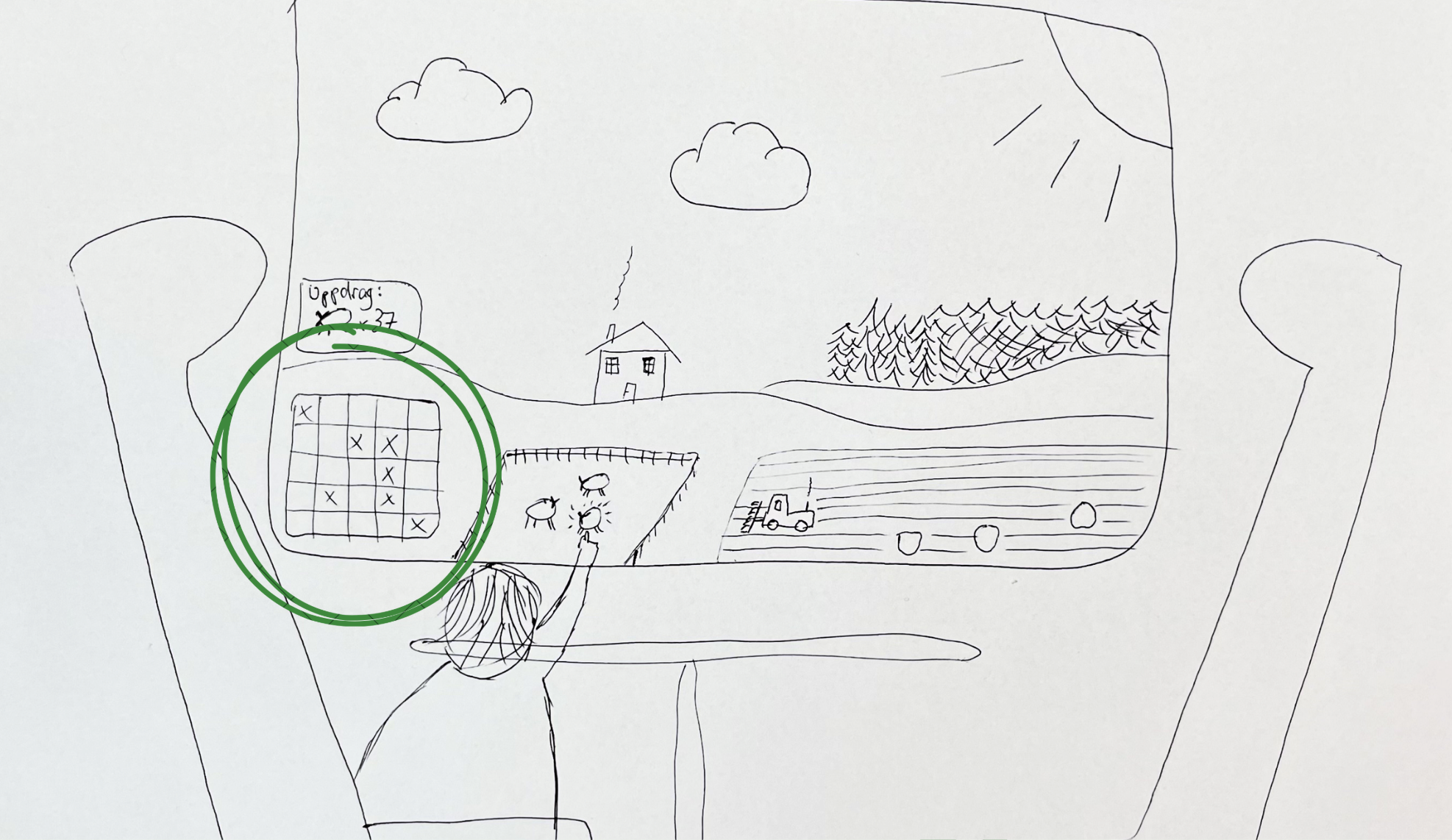
I sketched the interaction early (bingo overlay, constellation/night mode), then built higher-fidelity concept visuals of the Bingo interface on a real train window. The concept was tested with children aged 2–10, and the interface was adjusted based on what held their attention.
The concept turns a source of parental stress into a moment families look forward to, addressing a disruption concern the research showed was more perceived than real.
- Test the concept further with real users on board
- Explore additional use cases beyond family travel